Part 5 of 8 · Thu 22 Oct 2026 · 3 min read
Remind me, don't manage me
90% of people in our survey would let AI send reminders. Only 20% would let it assign work. Where people draw the line on AI in task management.
Ask people whether they want AI in their task tool and you'll get a vague yes. Ask them what exactly they'd let it do, and a much sharper picture appears.
Strong appetite for automatic status
We described a task board that keeps status up to date and flags slipping work automatically, without anyone moving cards. Among our 10 respondents, the average rating was 4.2 out of 5. Half gave it a 5, and 80% gave it a 4 or 5.
Their reasons were practical:
- It would prevent human error, and remove the manual work of keeping the tracker up to date.
- Checking where things stand would be easy, helpful and stress-free.
But a clear line on what AI may do
Then we listed specific actions and asked which they'd be comfortable letting an AI assistant take on their board.
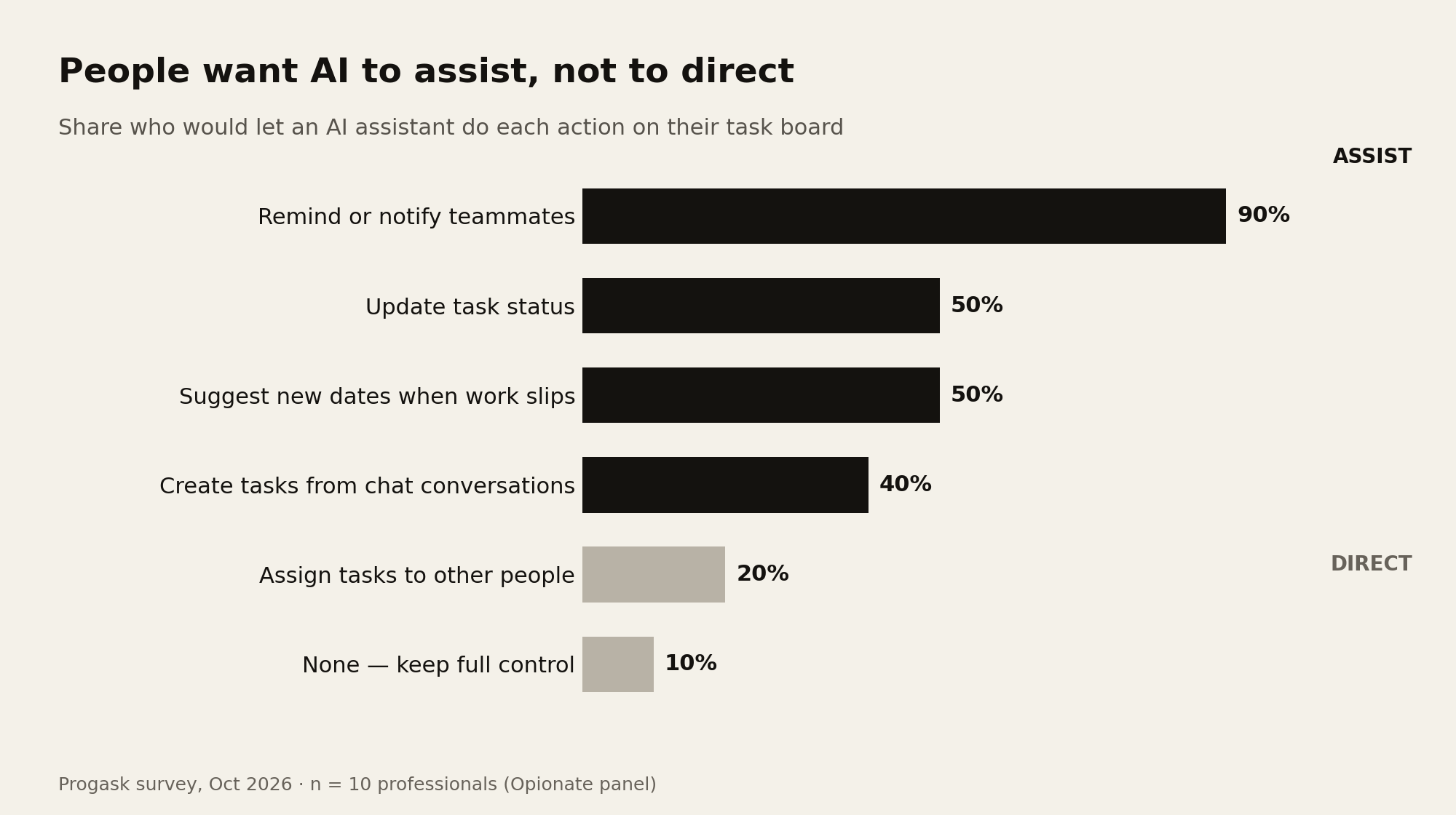
The pattern is easy to read. The actions people welcome all support a human decision:
- Remind or notify teammates: 90%
- Update task status: 50%
- Suggest new dates when things slip: 50%
- Create tasks from chat conversations: 40%
The action people resist makes a decision about other people:
- Assign tasks to other people: 20%
Note the wording that scored well: suggest new dates, not set them. People are happy for AI to notice a problem and propose a fix. They want to be the one who accepts it.
Who's more cautious
The split by role is worth a look, with the caveat that the groups are tiny. The four individual contributors rated automatic status 4.8 out of 5 on average. The five team leads averaged 3.8, and both of the lower scores came from team leads.
That fits the rest of the data. Individual contributors mostly feel the chore of updating. Team leads carry responsibility for the outcome, so they're more careful about anything that acts on their team's behalf. Any AI in this space has to earn a lead's trust before it earns their delegation.
Assistant, not manager
When we started Progask, our first idea was bold: let an AI set the pace of the team, the way a scrum master or project manager chases progress. We pulled back from that, and this data shows why.
People don't want a robot manager. They want help with the tedious parts, and to keep the decisions. That is the line Progask draws. Connected to your AI chat, it can read your board, add tasks, and suggest a new date or a finish when the conversation shows one. It changes a task only after you say yes. Who does what, and whether a task is really done, stays with people.
If you're adding AI to your team's workflow
A simple test from this data: before automating something, ask whether it informs a decision or makes one. Start with the first kind. Reminders, status updates and suggestions build trust; once people see the assistant is reliable, they'll tell you what else to hand over.
About the survey. In October 2026 we asked 10 people who work with at least two others how they manage tasks. Respondents came from a paid research panel (Opionate) and answered 17 questions, including a short story about the last task that slipped. Ten people is a small group, so read these numbers as early signals, not industry statistics. We plan to run a larger round.
Progask is free during the beta.
Start this week free